Thyristor Power Controller About
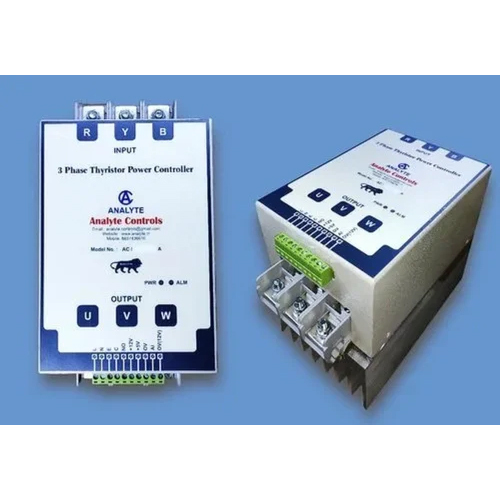
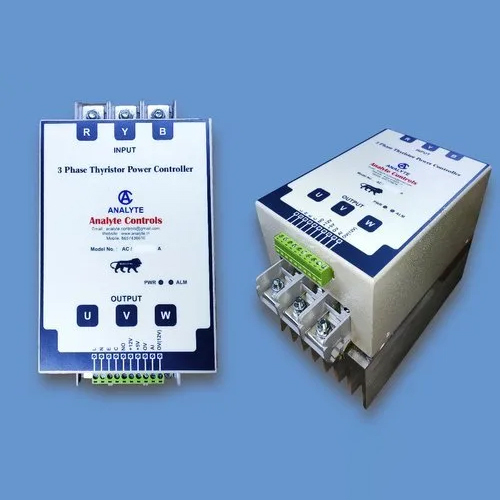
A Thyristor Power Controller (TPC) is an electronic device using Silicon Controlled Rectifiers (SCRs) to precisely regulate power to loads, especially heaters, by controlling voltage/current via phase angle or burst firing, offering efficient, smooth, and accurate heating control with benefits like reduced energy use and longer heater life over mechanical contactors, ideal for industrial ovens, furnaces, and plastic lines.
Reliable and Efficient Power ControlThis power controller provides consistent switching for various industrial applications with a high efficiency rate exceeding 96%. Its robust design and protective systems ensure stable, long-term operation for demanding environments like furnaces and motor regulation.
Advanced Control and Safety FeaturesEquipped with modern phase angle and burst firing methods, the controller offers precise voltage regulation and fast response times. Comprehensive protections guard against overload, short circuit, and overheating, while the durable insulated enclosure enhances user safety.
Versatile Application and Easy IntegrationSupporting a wide input signal range (4-20mA/0-10V DC) and multiple load types, this controller is ideal for diverse industrial needs. The compact panel mount design and screw terminal connections simplify installation and integration into existing systems.
FAQ's of Thyristor Power Controller:
Q: How does the Thyristor Power Controller benefit industrial electrical heating applications?
A: This controller delivers precise power regulation, ensuring rapid and efficient control of heaters, furnaces, and ovens. Its fast switching, robust safety features, and high efficiency minimize energy loss and prolong the lifespan of connected equipment.
Q: What types of loads can the controller handle, and where can it be used?
A: It supports resistive, inductive, and capacitive loads, making it suitable for industrial heaters, motors, furnace elements, and other equipment needing accurate power control. Its application ranges across industries like manufacturing, material processing, and automation.
Q: When is phase angle control preferred over burst firing for this controller?
A: Phase angle control is ideal when precise adjustment of power to the load is required, such as in applications needing smooth temperature regulation. Burst firing is used for rapid full-cycle switching, which is beneficial for certain high-speed industrial operations.
Q: What process should be followed for installing and operating this device?
A: Mount the controller securely on a panel in accordance with standard practices. Connect input signals and loads using the screw terminals, ensuring all wiring matches specification. Check LED status indicators for operational feedback, and regularly monitor for any protection alerts.
Q: How does the controller maintain safety and reliability during use?
A: Built-in overload, short-circuit, and overheat protection mechanisms actively safeguard the controller and connected equipment. The high-grade insulated box and industrial materials offer resistance to corrosion and heat, ensuring safe and stable operation even in harsh environments.
Q: What is the expected lifespan and maintenance routine for this power controller?
A: With a life cycle exceeding one million switching operations, the controller requires minimal maintenance. Routine checks for dust accumulation, secure connections, and proper LED indicator function are recommended for continuous, reliable performance.






 Get Latest Price

 Send Inquiry
 Send Inquiry
 Send SMS